
Tackle

Grayling in the South West

Submitted by admin on December 8, 2008 - 3:57pm

The grayling, in the past often maligned as vermin on trout rivers, is at last being recognised as a truly sporting and wild fish.

The fact that their season continues after the close of trout fishing, and that they take a fly readily, reinforces their attraction to the thinking, sporting angler.
A surge of interest has taken place in recent years, starting slowly back in the 1970's with the publication of Reg Righyni's classic book `Grayling', and the formation of the Grayling Society, and continues to gather momentum today, as ever more fishermen pursue this most attractive and elegant fish.

Distribution in the South West
The Wessex region is home to some fine grayling, with the Wiltshire/Hampshire Avon system probably having the densest population in Britain. The Frome holds some very large fish, certainly in the 31b class, mostly downstream of Dorchester. I believe there are grayling in the Tone, then moving west into Devon and Cornwall we have two isolated but thriving populations in the Exe and Tamar systems. On the Exe they can be found all the way up from Exeter to the Barle junction and into the lowest pools on the Barle. On the Tamar they are well distributed throughout the main river and most of the tributaries, particularly the Inny, Lyd and Ottery. In was on the upper reaches of the Inny, on a cold, grey day in March 1967, that I saw my very first grayling, and I have been fascinated ever since by "The lady of the stream".

Tackle
A light, crisp actioned fly rod of around 9 feet, matched with a floating line no heavier than AFTM 5, is perfect for most waters. I prefer a double tapered line, it allows a more
delicate presentation and is more suited to roll casting, often essential on small streams. The reel should be a light nononsense job, well filled with line and backing, not for playing the fish but to minimise line coil and memory. I needle knot a 9ft knotless tapered leader (31b of 5x) and add 3 feet of 21b nylon as a tippett, attached with a three turn water knot. Waders are useful, with chest waders preferred. You will need all the other accessories you would normally carry when trouting, floatant, sinkant etc. Most essential though is a pair of long nosed forceps of similar to facilitate unhooking and returning your fish. Hooks should be barbless, I often catch salmon parr, unseasonable trout and even sea trout whilst fishing for grayling.

Tactics
First, find your fish! On the clear waters of the Wessex trout streams careful observation with polaroids will soon reveal the fish. Grey shadows on the river bed, ever on the move to intercept a drifting nymph or lumbering caddis. Rising fish are on obvious give away, but are they grayling? or perhaps brown trout or salmon parr. The rise of a grayling can be seen to be slightly different to other game fish, due to the grayling's unique habit of lying hard on the river bed and rising almost vertically to the surface to engulf it's prey, and returning at once to the gravel. This causes the fish to make an oily, kidney shaped whorl on the surface of the water, often accompanied by a bubble as it turns a sort of somersault on it's way back to the river bed. In clear water the fish can often be seen emerging from the depths like a missile a split second before breaking the surface. In the absence of fly hatches and rising fish the only way to find your grayling is to fish all the likely looking areas and, once a fish has been landed, cover the area thoroughly as grayling often shoal. As the trout season ends and the water temperature drops this shoaling behaviour becomes more apparent, with some parts of the river completely devoid of fish, so it pays to know the sort of water the grayling prefer. Local advice and information can be invaluable, but if none is available look for steady, even flowing water of between 18 inches and 6 feet in depth, the colder the water the deeper the fish will be.

Wet and Dry Fly
Small wet trout flies, fished either up or downstream will take grayling in summer and early autumn, but are indiscriminate and far less efficient than dry fly or nymph.
A hatch of naturals, in any month of the year will bring grayling to the surface and provide superlative sport on a dry fly. The grayling is a fussy feeder and any untidy presentation will result in the fly being refused. From it's position on the river bed the grayling has a wide field of view, so the fly should land without disturbing the water and drift for several feet without dragging, in order to deceive her ladyship.

Fly patterns are less important than presentation, though if the insect on the water can be identified and matched by a suitable artificial, so much the better. Grayling will often feed on tiny flies and your box should contain a selection from size 12 down to 18 or 20. Despite taking tiny flies it is not unusual to catch grayling while spinning for salmon with a small Mepps and my biggest grayling, a two pounder, took a large lure at night while I was after sea trout! Many of the traditional grayling flies are still highly successful today. Fancy patterns such as Red Tag, Treacle Parkin and Bradshaw's Fancy are excellent. The modern range of cul-de-canard flies, with their highly imitative properties, are very hard to beat. The flies visibility to the angler is also very important, particularly in the fading light of and October or November afternoon. I like parachute style flies with a highly visible wing post of white calf tail or synthetic wool, the American elk hair caddis is also highly visible and can be very effective, even when caddis flies are absent. Grayling take a fly very quickly and your strike must be equally rapid if you are to hook your fish.

Nymph Fishing
There will, of course, be times when there are no naturals hatching and the surface of the river slides past unbroken by the rings of rising fish. Now is the time for the nymph, without doubt the most effective way of catching grayling. The late Frank Sawyer, river keeper on the officer's club water on the Wiltshire Avon at Netheravon, invented his famous killer bug purely as a way of catching and removing unwanted grayling from a trout fishery. On the chalk streams where the clear water allows fish to be stalked and targeted, cast your weighted nymph upstream of the fish and allow it to drift downstream, keeping an eagle eye on the point where your leader penetrates the surface film. It pays to grease the leader down to the tippet knot and sink the tippet with fullers earth. When the fish takes the knot will twitch or be pulled under and your strike must be instantaneous. If a fish keeps refusing your fly try the `induced take' by lifting the rod just before the nymph reaches the fish. This lifts the nymph enticingly just in front of the fish's nose and few grayling can resist it.

When the fish are not visible I use an indicator on the leader, either a tuft of wool treated with floatant or a pea-sized lump of Float-do or similar material. The position of the indicator determines the depth at which the nymph will fish and, crucially, indicates the take. Obviously a heavy nymph is needed to fish deep water and I am a great fan of the bead headed types. Gold and copper heads work well on most patterns such as hare's ear, pheasant tail and even the original killer bug.

Caution and Conservation
Grayling share their habitat with trout and salmon which spawn during the autumn months. CHECK with the owners of the fishery to see whether fishing for grayling is allowed after the close of the salmon and trout seasons. More importantly, if you can fish, DO NOT WADE anywhere near the pool tails between October and March. Fertile trout and salmon eggs will be buried in the gravel shallows and walking on them will damage our fish stocks for future years.

I would like to close with a word on conservation. At one time grayling were ruthlessly culled from trout streams by any means possible. This has been proven an ineffective as a way of reducing numbers and just reduces the average size of fish. Today most fisheries value the presence of grayling, they are an excellent indication of good water quality and happily co-exist with other game fish. In early autumn, when in their prime, grayling make excellent eating, but only take what you need (they are protected by law through the coarse fish close season, 16 March to 15 June inclusive and other bylaws may apply).

All out truly wild fish stocks are under threat these days and it would be nice to see anglers actively caring for the grayling and the rivers they inhabit.
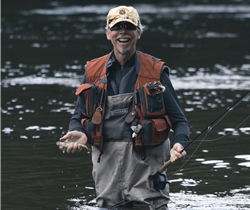
Grayling in the South West

Submitted by admin on December 8, 2008 - 3:57pm

A cool wind was blowing down the River Barle on that March day a quarter of a century ago. Around midday the trout had come to the surface and several good fish had taken my dry fly but by mid afternoon the surface activity had ceased and I was ready to call it a day. Then, as my fly drifted down a smooth run, I saw a shadow move up beneath it and drift back with the current for several feet before delicately taking the fly. My strike met a solid resistance and, as I saw the large upright dorsal fin holding the current, I realised that I was into my first grayling since coming to live in Devon. Two more casts produced two more grayling, both close to a pound, and I was reminded of something that I had learned on many other waters - grayling are shoal fish and like the company of other grayling.


Before moving to Devon some 30 years ago I had fished regularly for grayling on the rivers of the Welsh Marches and the chalk streams of Wessex, so I was pleased to re-establish my acquaintance with this lovely fish on the Barle. Grayling are not indigenous to the south west, but arrived as part of the fashion for extending the range of the species through artificial stocking that started in the late nineteenth century. In Devon and Cornwall the grayling is found in two river systems, the Exe and the Tamar, but its distribution is often patchy and unpredictable so locating the grayling hot spots can depend heavily on luck.


I recall an early spring day on the Ottery in Cornwall when I was fishing for trout on the topmost of the Arundell Arms beats. Conditions looked ideal for trout and fish were soon coming to my dry fly - a size 16 Adams. However, those rising fish were grayling with the trout strangely absent and when I called it a day I had caught 15 grayling and just one solitary trout. Since then I have fished that beat many times but failed to catch another grayling, though I have taken plenty further down the Ottery.

A similar experience occurred on another Arundell Arms beat, this time on the Lew. Once again it was spring and with nothing rising I was steadily catching trout on a weighted Hare's Ear Nymph. As I approached a small pool, I saw a swirl in the shallows at the tail and when my nymph dropped into the steam near the fish it was taken instantly and I had soon netted a lovely grayling of 14 inches. Two more grayling of the same size quickly followed, but I have never taken a grayling from the Lew since that spring day.

My most consistent sport with grayling on the Tamar system has been on the main river itself, especially in the Polson Bridge area. There I have often found shoals of rising grayling and settled down to picking them off with a small dry fly.

My most consistent sport on a Devon river has been on the lower Exe, where the grayling are of good average size and rise well on the right day - and the ideal day is when there is hardly a breath of wind. This is an exposed stretch of river and the surface is easily whipped up by the wind, making it difficult to spot the delicate rises of the grayling. On a calm day, however, you can locate big shoals of grayling sipping on the smooth stretches and enjoy first-rate dry fly fishing.

It is in Wessex, on the River Avon in the Woodford Valley between Amesbury and Salisbury, that I have taken some of my biggest catches of grayling, especially when nymphing in October and November. On a sunny autumn day when it has been possible to spot the fish in the clear water, stalking the grayling can be both productive and exciting. The trick is to locate a shoal against a patch of light-coloured gravel, which makes it possible to spot each fish and see it take your weighted nymph. By starting with the fish at the downstream end of the shoal and pulling each fish quickly downstream as soon as it is hooked, it is possible to take several grayling before the shoal is spooked. Those Avon grayling may not be the biggest, but there are plenty of them.

For big grayling, there are few better places than the Frome below Dorchester, where fish of well over two pounds are common. Permits for the Dorchester Fishing Club are restricted to the trout season but that gives you plenty of opportunity to catch the big grayling on this fishery. I recall fishing a clear pool where a big shoal of grayling up to over three pounds could be seen lying in about four feet of water. A heavily-weighted shrimp pattern was cast well upstream and allowed to drift through the shoal, with spectacular results. The first cast produced a "tiddler" of little more than a pound, but it was quickly followed by two fish of 2¾ pounds each, and another of the same size for my companion. It is in the winter, when club members fish with bait, that some of the really big Frome grayling of well over three pounds are caught.

In the south west, grayling are also present in the Bristol Avon, Tone, Brue and Stour, but I have yet to fish for them on these rivers.

Tackle and techniques for grayling fishing are really the same as those for river trout fishing. When the fish are rising I sometimes use the traditional grayling patterns like a Red Tag, Bradshaw's Fancy or Grayling Witch, with their brightly-coloured tags, but the more imitative flies that are normally used for trout are just as effective. On the chalk streams, where sight fishing with a weighted nymph is very effective, a size 12 or 14 leaded shrimp or a goldhead Hare's Ear Nymph will usually do the trick.

In the past, the grayling has often been loathed by those who manage our more famous trout streams and great efforts made to remove what has been seen as an unwelcome interloper. Fortunately, such efforts were always doomed to fail, as the grayling is a great survivor, and in recent years more and more anglers have come to realise its true value as worthy adversary for the fly fisherman. If you have yet to catch one of these beautiful fish, you have a treat in store.

Sexy Trout

Submitted by admin on December 8, 2008 - 3:57pm

Dr. Stewart Owen


You may hear anglers speak of triploid fish, especially at trout fisheries. Triploids are in fact sterile fish, but why do we need them and where do they come from? Read on and fish biologist Dr Stewart Owen will answer these questions and give an insight into a fascinating aspect of fisheries management.

Why do we need sterile fish?

When there is a risk of introducing a new species to a fishery or catchment area, fisheries officers and managers apply the precautionary principle. There must be the 'least risk' of introduced fish affecting those already present. Where a species is non-native such as rainbow trout, fisheries managers do their utmost to prevent a viable population establishing and so reduce the theoretical risk to the natural populations of other species already present. In some cases such as with our native brown trout, the genetic diversity between river systems has recently been realised. Stocking fish of one particular blood-line in a river system containing fish of a different genetic history is now increasingly restricted. To allow some fisheries to function it is necessary to stock with either fish from a particular compatible source (such as those spawned from resident fish) or stock with sterile fish.


In the UK climate rainbow trout spawn in late winter (Jan-March) and as used to be the normal situation before fish were sterilised, the female fish swell with eggs during this period. A female invests all of her energy into producing the best eggs she can. This means that she mobilises her own muscle protein and fat from her body and sends this energy to the eggs. When you catch a fish 'in egg' her flesh quality will be poor compared to when she is not producing eggs. If a triploid fish is not able to produce eggs, then the benefit for the angler is that the flesh quality remains throughout the year.

How do fish become sterile?

There are several methods used to sterilise fish. If the fish already exist then they can be prevented from maturing using chemicals or hormonal treatments. This is effective, but very expensive and time consuming. But a method is commonly used to produce fish that are sterile from birth. This is called triploidy.


Like us, fish are made up from genetic information gained from both parents. Half of the genes come from the father, and half from the mother. Genes are the instructions to a cell of how to build proteins. They are stored in long strings of DNA that are tightly coiled into units called chromosomes. Different species have a different number of chromosomes containing different numbers of genes. A single set of genes from a parent is called a haploid set. At fertilisation, the egg and sperm come together and pair their haploid sets so the resultant baby has two complementary sets of genetic information and is referred to as being Diploid. That is it has two haploid sets. A diploid fish goes on to develop into a normal fish and will mature and reproduce when the time is right.


If the egg is physically shocked shortly after fertilisation occurs, then it is possible to produce a fish with three sets of chromosomes, a triploid fish. The egg does not in fact manufacture an extra set for itself. The extra genetic information actually comes from the female parent and is present before fertilisation. Under normal unshocked fertilisation this information is lost from the egg as it is fertilised. But a shock, such as an increase in temperature, physical shaking or an increase in environmental pressure prevents this information leaving the fertilised cell. There is no genetic modification. Genes have not been changed or manufactured. The number of chromosomes are increased because a set are not lost on fertilisation. The fertilised egg is left with three copies of genetic information rather than two. Two from the mother, and one from the father. Triploid fish grow and develop as normal. After all they have the same information within them as diploid fish. But when it comes to producing eggs for themselves, the three sets of information do not divide conveniently and so no viable eggs are produced by hen fish. Triploid males do not produce viable sperm.


This is actually a simplified account of the process. Many fish naturally have many sets of identical chromosomes. Some species are naturally tetraploid (four sets), hexaploid (six) or even heptaploid (seven). The term given to more than diploid is polyploid. Wild trout are not in fact diploid to start with. Native wild trout swimming in the rivers of Britain are polyploid naturally. So as a trout embryo is made triploid, the fish could actually contain 18 sets of genetic information.

How do fish farmers produce triploids?

To make fish triploid the newly fertilised eggs are physically shocked. In practice this means the eggs are placed in a special pressure vessel and subjected to a very high pressure. The timing after fertilisation and the actual pressure are critical to the process. If the farmer times this wrong then mistakes can be made. The balance is a fine one. Too little and it does not cause triploidy whilst too much pressure kills the eggs. It is difficult to judge the success until the fish can be sampled and examined under the microscope, or mature as adults. The triploid eggs go on to hatch and grow normally into adult fish. However it must be remembered that the process is a biological one and as such triploidisation is rarely 100% effective. Some fish of each batch seem to escape the process and mature as normal fish. We expect our suppliers to provide fry that are normally much better than 90% triploid. That is we generally expect that one fish in ten from a batch of triploids will develop eggs in maturity. It is therefore important that the farmer grades the fish to remove any hen fish before these fish are stocked into critical waters. This is a point often overlooked and a batch of triploids may still contain a small number of fertile fish.

Where do our fish actually come from?

In order to supply trout all year round for the UK markets, eggs are sourced from around the world as different geographic regions provide spawning at different times of the year. Of course some producers spawn fish artificially all year around, but UK fish are typically British, Danish and South African in origin. Eggs also come from America, Canada, Iceland, Faeroes, France, Chile and Australia. This is a tightly regulated industry with government ministry regulation and inspection that insures full trace-ability with veterinary health checks. Once the eggs have passed through the hatcheries they are 'grown-on' at one of the many restocking farms throughout the UK from where they are traded until they reach the anglers hook.

Get Hooked! - On the Westcountry

Submitted by admin on December 8, 2008 - 3:57pm

Tucked away, in this comparatively small island, are still places, mercifully, where footprints are few. Places where you can, just for a moment, rejoice in wild company and glimpse at a less populous past. Most of these are situated westerly: and a very unfair proportion can be found in the West Country: damn it! I say this, because I am a long way away and I can’t fish the huge variety of waters and diversity of species that this area has to offer, as much as I would like. I guess this makes the experience all the richer. I think too, that taking the West Country, as a whole is just a little misleading. Do we talk about the imperious coast-line and the wolf of the waves: bass? The more languid mullet or wrasse? Do we talk about the brutes of the channel wrecks and deep sea water?
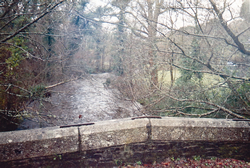
Fowey River Water - A brief fisherman's review

Submitted by admin on December 8, 2008 - 3:57pm

Bill Eliot, Hon Sec. Liskeard & District A.C.

The River Fowey is a prime Cornish spate river giving excellent salmon and seatrout fishing. It is one of only two rivers in the south west of England holding its targets for sustainable salmonid stocks.
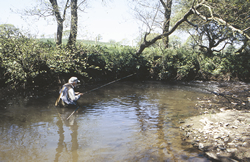
Both salmon and seatrout prosper by breeding in the clean waters of the high country which is Bodmin Moor. However the nature of the water in the River Fowey is made complex because the river is used by the water utility company (S.W.W.) as a water conduit. From their reservoirs at Colliford and at Siblyback on Bodmin Moor, water is released according to the needs of the seasonal population of Cornwall to the treatment plant at Restormel just above the tidal limit. This complexity affects the migratory salmon and seatrout using the river to breed and it affects where they lie and how we may fish for them.

The Fowey catchment has five important feeders, all of which start high on Bodmin Moor and tumble down off the moor into the right hand bank or northwestern side of the main river

River Trouting - Tips for Success

Submitted by admin on December 8, 2008 - 3:57pm

The margin between success and relative failure in fishing can be very small and this is particularly so in the case of the type of angling that I enjoy most – fly-fishing for trout on rivers. Indeed, there is an old saying that ten per cent of the fishermen catch ninety per cent of the fish and, although this sentiment may include a degree of exaggeration, it is probably pretty close to the truth. So, if you wish to join that small percentage of really successful fly fishers and clean up on the streams, what can you do to achieve success? Many anglers never get past the barrier of thinking that there is a single key to success and that a wonder fly rod or an irresistible fly will guarantee a constant flow of trout coming to the landing net. Fortunately there is no such “magic bullet” and if there were fishing would soon lose most of its fascination. Success, when it comes, is the result of getting lots of little things right, so here are a few tips to increase your strike rate with the trout on our rivers.

Going Wild

Submitted by admin on December 8, 2008 - 3:57pm

There is something a bit special about tiny streams, especially for the wild trout fisherman. Our native wild brown trout is ideally suited to thrive on the smallest rivers and fortunately the south west has more than its share of these exciting waters, whether high on Dartmoor, Exmoor or Bodmin Moor, among the meadows of the rolling country of mid Devon or on the silky little chalk streams of Wessex.
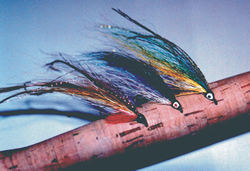
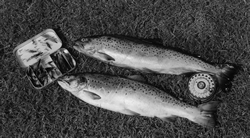
The great advantage of these tiny waters, many of which you could almost jump across, is that they usually give up their secrets readily, and the hot spots can be identified with an ease rarely possible on larger rivers. So the first trip to a new piece of fishing can often produce as good a catch as anything experienced on later visits.

Success on small rivers, like anywhere else, is all about using the right tackle and techniques, and that means scaling things down. You will certainly need a short fly rod, but not one of those ghastly implements that used to be called “brook rods”.

The Saltwater Experience - Fly fishing in saltwater

Submitted by admin on December 8, 2008 - 3:57pm


As a lad, about 45 years ago I owned a fabulous little rod, about 8ft long, split cane, with a handle that you would reverse, making the reel seat either at the very end, or about a foot up the rod. This made it a great all-rounder, a fly rod, spinning rod and short bait rod and everything else in between. I was very lucky, growing up in the town of Bude, on the North Cornish Coast with a variety of fishing on my doorstep.


I would walk up the canal tow path to a little stream known as Sharlands, at it's widest no greater than 10ft where I could fish for magic little brownies with either fly, or spin with the proverbial Devon minnow. Sharlands then ran into a feeder, which divided into the Bude Canal and into the River Neat, which ran for about 2 miles before reaching Bude.

Sea Trout Fishing in Devon

Submitted by admin on December 8, 2008 - 3:57pm

Roddy Rae - Reffis/Stanic

The Editor has requested that I do an article on Sea Trout fishing in Devon hence the title. It would be easy for me just to write a few paragraphs on my own experiences of fishing the Teign, Taw, Torridge, Mole or Dart and leave the reader with the feeling of ‘oh what a lucky bugger he is doing this for a living’, but you will be pleased, I hope, to read that’s not what this article is about.

The wealth of Sea Trout fishing available to the visiting angler in the Westcountry is matched, I believe, only by Wales. Rivers such as those that I have already mentioned plus many more, all of which can weave their magic spell on you and send you home in the early hours wondering to yourself how can I crack the code?

Thanks Dr Beeching

Submitted by admin on December 8, 2008 - 3:57pm

This article was published in the February 1994 edition of Trout Fisherman under a different title.


So what has Dr. Beeching got to do with fishing? Well, if it wasn't for his infamous massacre of Britain's railways a particular piece of branch line on the Devon-Cornwall border might still be in use.

Instead about 220 yards of a secluded cutting has been nurtured into an idyllic piece of private fishing for Rainbows and Browns. The railway closed in 1963 and I can still recall riding, as did many others from the locality, on the last steam train from our small Cornish town. The piece of line in question remained unused until 1985 when the owner built a dam at one end of the cutting creating 100 yards of water about 30 feet wide and around 9ft. deep. That same year an initial stocking of 40 twelve inch Rainbows and 10 twelve inch Browns was introduced into this virgin water to provide sport for the owner and some fortunate friends.

A few Minnows were also put in at this point and the fact that their numbers have remained low proves they are doing their job in providing food for the larger inhabitants. Also just four Loaches were added and now there's one under every other stone.

The cost? Initially about £1500 but this was not a site designed purely for fishing. The pond and its immediate surroundings were intended as a conservation area and have proved very successful. Ornithological sightings have included Kingfishers, Herons a white Egret and Canada Geese Insect life has also prospered with a stunning population of iridescent Damsels as well as a profusion of Butterflies and Dragonflies.

The first year was not, however, without problems! The predictable one, in a water this size perhaps, was lack of oxygen in high summer. Emergency measures were taken by pumping oxygen into the water to try and persuade the Trout to stop swimming upside down and a long term solution seems to have been found in Potaganta Crispa. This is a curled pond weed and an excellent oxegenator also it is very soft stemmed, the advantages of which you'll read about later!

In 1988 the water was extended further back up the railway line, creating shallows at the 'top' and a heavily weeded area which proves very popular with the Trout. At this time the pond was drained and, having kept a close record of the numbers of fish caught, the owner found himself about 30 short. Picturesque Herons may be, but along with Cormorants they were, no doubt, responsible for the deficit. A change in stocking policy remedied this problem as introducing the Trout at 2.5 to 3 pounds seemed to make them too big for the predators to handle. The Trout are no mean predators themselves as the following account explains.

The owner and his young son Ben were at the waters edge one evening when Ben found a full grown frog in the bankside vegetation. He 'kindly' slipped it back into the water and it started out for the other bank. Both spectators were observing its progress when a dark shape approached the luckless amphibian. The water was barely disturbed as an enormous mouth opened and leisurely closed, engulfing the frog completely. Now there's a challenging imitation for an enterprising fly tier!

A beautiful summers afternoon in June formed the perfect backdrop when I was given the opportunity to fish, allowing the owner a chance to get some photographs at the same time.

I tackled up with an 8'6" rod, level 61b 10ft leader and a single pheasant tail nymph. The physical shape of the water and the wonderfully lush vegetation makes casting a little tricky and it's surprisingly difficult to reach the other bank, a mere 30 feet away. The owner obviously knows the water intimately and suggested a lure with a predominance of yellow would get the best results, but as I prefer using a more natural pattern I stuck with the pheasant tail. I started at the dam end and worked my way along, covering the water 'fan' style and varying the depth as I went.

I had not moved anything by the time we reached the 'top' where the trees open up a little and the weed provides excellent cover and, no doubt, an abundance of food for the residents. So, a yellow lure is it? The ends usually justify the means and just such a fly lurked in the box.

With a bit more room to manoeuvre I could just about manage a steeple cast to the other bank, dropping the fly next to a tree stump and letting it sink a couple feet before starting a steady retrieve. Two casts to the same spot and about 4 steady draws into the retrieve, the fly slowed up in a most leisurely fashion just like being snagged on some soft weed. I eased on a little more pressure and as the line accelerated away I tightened into a fish. Wallop! The Trout cleared the water in a burst of spray and headed off down the pond in a fashion reminiscent of the steam trains that once thundered over this very spot. Within a couple of seconds the entire line and 20 yards of backing followed the fish helplessly into a large weed bed where everything went solid. There's nothing to do in such cases but steadily pump line back and hope the fish is still attached, luckily (aided perhaps by that soft-stemmed pond weed) it was and I now had it under a little more control. She turned in front of me (I could see it was a hen fish) and I felt a pang of guilt as her mate appeared fleetingly beside her then vanished, surely just curious, following an instinct, although it could have seemed, to those with a vivid imagination, a last farewell. The battle was almost over now, a couple of despairing lunges for the nearest cover was all she could manage, the weeds over her snout testament to her efforts. The net slid into the water and the fish was mine.

She was quickly despatched and turned the scales at just over 8lb 8oz, a fish of classic proportions grown on from a couple of pounds and in all probability nearing the end of her natural life. The late afternoon sun provided some beautiful natural light for the photographs and although I could have stayed and fished on I felt spoiled enough. Very rarely does the opportunity present itself to fish in such gloriously unspoilt surroundings. Combine that with the quality of the quarry and it's more than enough for most anglers, certainly for me.

Pages