
Tackle

A Golden Pleasure

Submitted by admin on December 9, 2008 - 4:08pm

My float has been bobbing up and down, showing signs of movement from rudd and roach. I've caught, in the hour or so I've been here, about twenty small fish, and one large, and very beautiful, golden rudd, the first I've ever caught. I was surprised at how golden it was. It's back was almost orange fading to a brilliant gold leaf colour on its body. I felt so happy to holding it, as if I'd caught my first salmon or carp. It released a new and bright enthusiasm over me, reminding me of my old feelings of why I fish, which sometimes, after spending weeks after uncatchable carp, fades and disappears.

The enjoyment of catching fish is overwhelming as my float sinks and I'm reeling in another.

A rudd. Its silver scales glisten and sparkle in the sunshine, its blood red fins move in time with its mouth and gills. The hook is easily removed, with a disgorger, and then the fish happily swims away.

I caught my largest roach to date from this pool, it must be a little over a year ago now. I'd spied three well rounded tench skulking close in to the bank, but hidden by an overhanging hazel. I'd managed to crawl through a labyrinth of bamboo, under the fence that surrounds the water, and slithered my way close to the tree. There in full technicolour where the tench but to my surprise, four very large roach nudged the water's surface. They looked lazy and arrogant, as though no one knew that roach that size inhabited the pond. How big? The largest looked to be close to three pounds and the others very nearly the same.

I then fished in earnest for them. Stooped in a very awkward position, I managed to thread my rod's tip through the undergrowth and out to where they basked. I tried all manner of baits, even artificial flies, but they seemed to know all about the threats from above, perhaps this was why they had grown so big? I eventually made the mistake of leaning to hard on the branch of the hazel tree and promptly fell in!

It took three weeks of being scratched and torn to find their new hiding place, again they were with the tench, but under the roots of a fallen tree.

I tried to lure them out. I did proudly catch two of the tench, one of which weighed over four pounds. The weeks turned to months and I found out that they had a routine of moving with the sun. The water was incredibly clear and as the light moved around the pond, so did the shadows from the surrounding trees. They'd drift slowly, staying well away from the large shoals of dead-bait sized roach and rudd, who were content to bask in full sunlight.

When the sea trout were running in good numbers and the carp season was at its height, they took up a lot of my time. I slowly started to see sense and realise that I could never catch them, and with the greatest of respect left them alone.

The autumn rains came and stirred up the water making it into a thick stew of run-off and silt.

On my last outing of the year for the carp I had pre-baited with sweetcorn; and was happily float fishing for them around the groundbait, when the float sunk to my surprise and I reeled in, after a small scale tussle, the largest of the roach! It was entirely luck and not due to the skill or the amount of time I'd spent, that finally caught the emperor of roach!

But I don't hold out any hope of catching him or his brethren today. I cast out again and manage to curve my float as it sails through the air. It lands very close to the reeds which stretch out to my right. Almost immediately it ducks under again but I miss the bite. I'm using bread as bait and if I fail to hook a fish when I strike then it falls off, and I have to reel in, re-bait and re-cast.

Two black silhouettes drift under the water's surface near the reeds. They look to be carp about the size of my fore-arm. I fling my float and bait out near to where they are but they sink down and swim out into deeper water.

A wind whispers in the trees and wrinkles the surface, which moves my line and float closer towards the reeds.

It's hard to see my float tip when the ripples from the wind swallow it, and it also rides up and down on the swell.

My eyes lower and look at my rod point, then I follow the curve of the rod down to my reel. My line jerks out quickly and becomes taught and tight. I raise my head quickly and try to find my float, which has gone. I lift my rod and am instantly amazed as the fish on the other end is hardly a small rudd. My light float rod hoops over with force.

The fish on the other end bends it as if it's a car aerial. I sharply stand up to apply more pressure. My heart begins to pound once more.

The fish dives towards an overhanging holly tree by my left hand side. I lean out and lever the fish around in my direction. It rises to the surface and I have a pleasant surprise to see a small carp.

I bring it closer to me and lift it out of the water with my hands. It looks to weigh three or so pounds. A mirror carp and its small scales along the ridge of its back are silver and grey.

I should really fish more often like this. Casting in hope for anything that swims really! My line is four pounds breaking strain, so it's fine and light for the smaller fish yet man enough to handle any surprises. The same as my rod I suppose. 'Pleasure angling' is the term used, but surely all fishing is pleasurable? I do feel particularly satisfied when I fish in this way though and I never feel that frustrated emptiness that fishing for salmon and carp can often bring. However you can't have the pleasure without pain- can you?
The Gift of Angling

Submitted by admin on December 9, 2008 - 4:08pm

If you are a keen angler with children I feel it is only fair to introduce them to the sport of angling with the many benefits it can bring. In this day and age many anglers it would seem do not make an effort to give kids the start they need. Angling will hopefully give a lifelong interest in the environment and a means to unwind in an ever stressful world.

I have been an angler for as long as I can remember and have never regretted my obsession with the pastime I love. Of course not everyone is destined to like fishing, I mean it must be in the genes or something. Your child may not be cut out for it but many are if given a good start.

So how do we go about introducing our children to our hobby? First of all you must try to see the world through a child's eyes. A couple of hours fishing is all you should aim for at first. Bites and plenty of fish are essential if interest is to be maintained. Children especially boys have short attention spans. So for this reason choose a venue that has an abundance of small fish. At first do not fish yourself, give all your attention to assisting your child with the task at hand. You will inevitably spend a considerable time sorting out tangles, don't lose your cool just keep calm and encourage. Spend the session shouting at your pupil and they will never want to go again. Have regular breaks for a snack. If the going is slow try a new spot. If the fish are really not having it go home, do something else and try again another day. When they do catch try to show enthusiasm, a tiny Roach or Rudd may not excite you but it will probably thrill a child.

Tackle

Well I guess I jumped the gun a little with the above introduction as they will need to have some tackle with which to catch a few fish. Now they could use yours but that probably isn't a good idea. If its good gear it may get damaged and lead to frayed tempers, if its old cast offs it may hinder them not being suitable for the job at hand. Now I am assuming that your child is aged five to ten years. My son James is seven now and has been fishing for a couple of years. I started him off with a 3 metre Whip which he could use to catch small Roach, Carp, Rudd etc. A tackle box, a few hooks, Floats, split shot, disgorger, a bait box full of maggots and a permit will be all you require for that first trip. This should all cost you £25.00 or less.


  • Whip £6.00
  • Packet barbless hooks (16) £1.00
  • Split shot £2.00
  • Floats £2.50
  • Disgorger £0.50
  • Spool of line £4.00
  • Bait Box and Maggots £4.00
  • Permit £5.00

Compare this to the price of a playstation game or similar and I am sure you will agree its not that dear.

The main consideration when taking a child fishing is of course safety. Many children drown by lakes and rivers every year so you must supervise at all times and choose a safe venue. It would obviously be foolish to take a child fishing on a flooded river. Hygiene is also important. Many venues are infested with rats which unfortunately carry the very real threat of Wiels Disease. Make sure that you carry some anti bacterial wipes for washing of hands prior to eating and to clean any cuts or grazes picked up on the waterside.

Get it right and you'll enjoy teaching them as much as they enjoy learning!

Match Fishing - What's the attraction?

Submitted by admin on December 9, 2008 - 4:08pm

Max Palmer is from Tackle Trader

Over the last 15 years coarse fishing has seen many changes, not just in the south west but as a whole. Match angling is no exception, in fact it has probably changed more than any other area of the sport, but why?

There are some things that will never change. Man versus fish for one and a competitive spirit and determination to do better than others is another. These two ingredients are the main reasons that match fishing continues to be so popular, from the grass roots club level right through to international level. The way matches are run has also changed little over the years. Booking your place, turning up on the day and signing in, paying pools, drawing pegs, fishing the match and gathering with great anticipation to await the results. These basics are, however, where any similarities between modern match fishing and the sport of old come to an end.

There are two major contributing factors to coarse angling that have brought about this change. Firstly, the emergence of heavily stocked commercial fisheries and secondly, the massive changes in the fishing tackle industry, fuelled by the rapid development in technology which have given todays fishermen a huge head start on anglers of just 15 years ago.

There is a general consensus that numbers of match anglers have declined over recent years, and many theories as to why. In truth, there has probably been a minor decline in terms of numbers. But with so many 'commercial' fisheries offering almost guaranteed sport, there are now maybe three times as many matches taking place each week, with far fewer anglers in each. Gone are the days where 'open' matches on our canals and rivers, saw weekly attendances of 100 plus, consisting of anglers from a wide area, all travelling to the same venue! If a comparison is possible, 80% of the anglers of today would split down into 4 matches of between 15 and 30 anglers on a familiar venue, that is generally a well stocked commercial, and that is much closer to home. Who can blame them!!

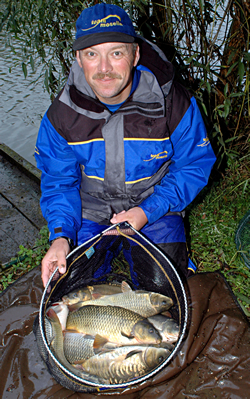
We are fortunate enough in the South West to have many such waters offering the kind of sport to which todays angler has become accustomed, the vast majority of which are present in this publication. With waters like Andy Seery's Stafford Moor, we also have a high quality match venue capable of holding events with 100 plus anglers and offering an incredible standard of angling at all times of the year! Something that the rivers and canals of our region, and other regions, simply cannot provide. Coupled with the changes in fishing habits and venues frequented, the quality and price of fishing tackle available today also has a major bearing on peoples attitudes towards match fishing. It is now an option for all anglers to obtain quality tackle at affordable prices, not least when it comes to poles. (although some poles can cost the equivalent of a decent car!!)

There are very few match anglers who do not own a pole. It is regarded as an essential part of a match anglers' armoury. Ten years ago, £200 worth of 10 or 11 metre pole resulted, for many, in a hernia or back ache! Today, for similar money, a fishable pole of 12 or 13 metres is widely available. This means the average match angler, using average priced tackle, is able to cope with 95% of match situations. In the past if you didn't break the bank, very often you where unable to compete. These facts mean that more anglers than ever before can enter matches in the knowledge that they have a chance, without being handicapped by inferior tackle and if, arguably the biggest factor in all fishing, LUCK decides to grace them on that given day, everyone can have their moment of glory.

I am positive that given the gradual decline of some of our natural waterways and canals, if it wasn't for the modern style of fishery, match fishing would have suffered a similar decline decline, and for myself and many others, that would be simply unthinkable. One thing is for certain. Getting up early on a Sunday morning, drawing a peg that you detest, giving 100% for the duration, regardless of the elements, and coming back week after week, sets a match angler apart as one of the most dedicated and enthusiastic participants of angling!

Man versus fish to the extreme?

Tight Lines

Decline of the European Eel

Submitted by admin on December 9, 2008 - 4:08pm

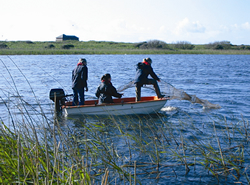
The European Eel (Anguilla anguilla) is an incredibly important, but often under-valued fish species in the Atlantic Area. It is essential to the economic viability of many small-scale coastal fishing communities in Europe as well forming part of the traditional fishing economy in the UK.
The eel, like the salmon, lives alternately in freshwater and seawater, but unlike the salmon, the eel spends its adult life (yellow eel stage) in freshwater then swims down river where it is thought to migrate out to the Sargasso Sea to breed (silver eel stage). This mass spawning produces vast numbers of larvae, which drift/swim with the ocean currents across the Atlantic. These larvae eventually reach the European coastline where they metamorphose and move up into rivers during the spring (elver stage).

Recently a massive decline in the number of eels arriving at European Rivers has been noted. ICES/EIFAC working groups recently defined eel populations as 'outside safe biological limits' with critical levels reached mainly in Northern Europe.

Carp on a Dry Fly

Submitted by admin on December 9, 2008 - 4:08pm

Mike Weaver

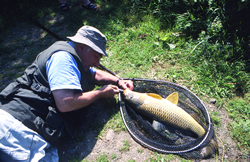
When I started fishing over half a century ago, carp had an almost mythical quality. Carp fisheries were few and far between – and when you found them their inhabitants had a reputation for being almost impossible to catch.
All of that has now changed. Wherever you live, there are likely to be several carp lakes within a short drive. The popularity of carp fishing has encouraged numerous fishery entrepreneurs to dig a lake, stock it with carp and open up for fishing – as this publication readily demonstrates. Check virtually any of the stillwater coarse fisheries in Get Hooked and you will find lakes that are stocked with a variety of carp, including common, mirror, ghost, koi or grass – and the good news is that they will all readily take a dry fly in the right conditions.

And the ideal conditions for catching a carp on a dry fly are just when fly-fishing gets really tough on the rivers.

The Match Fishing Scene

Submitted by admin on December 9, 2008 - 4:08pm

As a match angler of nearly 30 years I have seen changes to the sport I could never have envisaged when I started. From catching Roach, Bream and Chub from a sluggish Bristol Avon to the sometimes frantic sport encountered on the modern-day commercial waters.
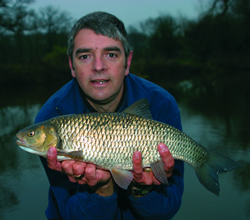
I have not fished a river for about 4 years, not because they are not as good as they used to be (as there still seems to be plenty of fish in them) and I see many anglers in my shop who still fish rivers every week - with some good returns. As with a lot of the nation's rivers the Avon seems to have had an upsurge of fish to specimen proportions. Carp to over 30 pounds, Barbel to 15 pounds plus and chub to 6 pounds seem commonplace.

Day Ticket Waters in South Wessex

Submitted by admin on December 9, 2008 - 4:08pm

The South Wessex area is famous for it's big fish waters be it the chalk stream waters of the Hampshire Avon and Dorset Frome or the clay filtered Dorset Stour and its tributaries. Much of the fishing on these waters are controlled by angling clubs and syndicates, but there are some stretches that are open as day ticket waters or free stretches and these can give anyone a chance to capture that fish of a lifetime.Tickets and more information on all the waters can be obtained from this guide or local tackle shops in the relevant areas.
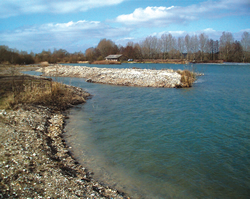
The Hampshire Avon

Starting on the Hampshire Avon to the north of Salisbury at Amesbury there is a small stretch of river that offers roach, dace, grayling and pike.


Salisbury & District Angling Club offer two of their waters to day ticket anglers. The first is a three mile stretch to the north offering the angler a chance to catch the rivers specimen roach and grayling with the odd big chub. The second is a two mile part of the River Nadder.

Angling & Conservation Developing partnerships to improve habitats

Submitted by admin on December 9, 2008 - 4:08pm

Allan Frake, Fisheries Recreation & Biodiversity, South Wessex

It is fair to say that over the years Angling and Conservation organisations have not always seen 'eye to eye' or been the best of 'bed-fellows'. Fortunately, things have been changing in recent years and the word 'conflict' is seldom heard echoing up the Avon valley. Both Conservation and Angling interest groups are working extremely hard in the South Wessex Area with a number of exciting initiatives underway and success stories reported.
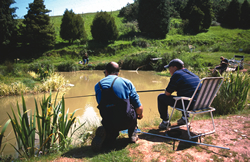
Opportunities for promoting river management and habitat enhancement to benefit wildlife are achieved by working with those people who make a vital contribution to caring for the river system namely landowners, managers and fishery interests along the river.

On the upper Hampshire /Wiltshire Avon catchment above Salisbury the Wessex Chalk Streams Project Partnership has been running for 3 years focusing on river enhancement and management on the tributaries upstream of Salisbury.

Teaching Good Habits

Submitted by admin on December 9, 2008 - 4:08pm

I have to say at the outset, that I was amazed by the amount of interest. Even given some small degree of apathy amongst the other teaching staff, that resulted in four forms not finding out about this new opportunity, 32 pupils signing up for my fishing tutorials was beyond my expectations.

Brixham is traditionally a hotbed of sea fishing, so when I put a note in the register at the Community College where I work suggesting pupils come to find out about coarse fishing, I wasn't really expecting the response I received. Still, it was very encouraging and dates were set for four groups of eight to attend an evening session in the classroom to look at the basics, followed by two sessions on the bank at local fishery New Barn Farm Angling Centre.

One or two of the pupils had experienced some kind of coarse fishing before, but really, all were raw beginners. First lesson was to be a very simple look at the kinds of venue available for coarse fishing and the kinds of tackle needed to fish effectively.

Best Laid Plans

Submitted by admin on December 9, 2008 - 4:08pm

Every year we seek a stunning cover picture. We plan it meticulously and it's a great excuse to go fishing. But it doesn't always work!
This year it was a two man, all night carp expedition to local water Clawford Vineyard. November is not my favourite month and I actually cancelled the trip on the preceding weekend due to forecasted `hurricanes' which didn't arrive on the night in question anyway.
My partner for the trip had, however, spent a not inconsiderable amount of time and money in preparation so we had reached the point of `have to go'!
The weather was actually pretty good when we arrived at the water, mild and a bit breezy and we decided to fish the newest lake of about 4 acres. There was no way we could get a vehicle near the lake with the ground being so wet and consequently we had to carry all the gear, which meant about six trips. The lake itself has been recently finished and stocked and it is a marvellous piece of design. Islands are positioned along its length to provide excellent spots to feed up in and such features really make a lake so much more interesting.
We picked our swims, assembled all the necessary gear and were fishing by dusk. I am by no means a carp enthusiast when it comes to the sit and wait approach. Floating baits are my passion and the sight of a Carp sucking down a crust six feet from your rod tip knocks spots off being woken by a hundred pounds worth of electronics every time, but I'm more than willing to learn. Boilies, back leads and bolt rigs? It's a whole language and I'm sure no sector of angling has become such a science as that of carp fishing. It's easy to scoff and often hard to understand how such seemingly insignificant changes to terminal tackle can make a difference, but the hard facts prove that they do, time and time again. The more cynical may see it as a major coup by the tackle companies and marketing departments but nobody is forcing you to spend that money and although all this technology may give you an `edge' none of it is really essential.

Anyway back to the fishing. We were using home made boilies (Solar fruit mix and esterblend 12) over a bed of Party Blend with extra hemp and, on a relatively new water with some green fish, our hopes were high.Mike's setup is fairly state of the art and had invested in a"budget" bite alarm for one rod and relied on the old fairy liquid bottle top for the other.

We cast into the baited swims and settled down for the night. Stringers - what a great idea! This was the first time I'd used them and, as with most good ideas, it's brilliantly simple and the perfect way to get extra feed right next to your bait.
As the night wore on (and to the uninitiated like myself November nights are very long) the wind increased and with it came rain. Mike was equipped with a bivvy which wouldn't move in a tornado. I had recently bought some second hand carp gear which included a decent brolly and a very basic dome overwrap. Brilliant in the calm of summer but not really up to this particular winter night. It did the job as far as keeping everything dry was concerned but it was not very stable and, through fitful sleep in the small hours, It was very difficult not to keep a hand on the pole as everything was moving so much and every time the wind really gusted the wrap would crack like a rifle, no I didn't get much kip!

We had not managed a run between us by 6am and Mike changed his hookbait to his failsafe `monster crab' which I could smell 50 yards up the bank. It worked, the optonics broke the silence at around 8am and a Common of about three pounds was brought to the net. Not quite what we hoped for but the first bite is often the start of some increased activity and always serves to wake you up. An hour or so later the monster crab brought a second fish to mike's rods and proved to be the best of the session. I did manage two small carp on boilies and, after it got light, I tackled up a float rod and was catching small carp and rudd every other cast on maggot, which suited me fine.

There were several anglers fishing the syndicate lake at Clawford and one of them had two high doubles during the night so we couldn't blame the weather. The lake we were fishing did, we discovered, have a lot of grass on the bottom which probably didn't help and pop ups may have been a better bet.No cover picture though, to be honest the weather wasn't very conducive and I only shot two frames of the one fish.
If you decide you'd like to try this type of fishing I'd say the first rule is to keep yourself warm. It was a pretty miserable night but had I been cold it would have been intolerable. What was keeping me warm was a borrowed thermal fleece one piece undersuit made to go inside a drysuit, brilliant piece of kit, in fact I went and invested in one of my own shortly after the trip. Gloves and a hat are also essential, as are thermal socks.

I still don't think I'll get over enthusiastic about this style of fishing. I can understand the appeal of fishing a water where you know there are very big fish and keeping at it until you catch one, but a three day session with all the gear required and a telly etc. doesn't really appeal. It is certainly still fishing but the emphasis seems to have shifted from the traditional skills to bait selection and tackle set up, letting bite alarms and bolt rigs take care of bite detection and hooking.

Interestingly, one aspect of the sport that remains vitally important across the board is watercraft. Whether you fish for Salmon or Roach, knowing your water is perhaps the most effective weapon you can have when it comes to catching fish. Ask any successful Salmon angler and he will be in no doubt as to the importance of knowing the lies. He will probably know all the best lies for any given height of water and this will be reflected in his success.

The location of wild Trout on rivers is a bit easier and you soon learn the likely spots and can spot them even on waters you have not seen before. On lakes which, on the surface, look pretty much the same a bar or deep hole can prove very productive and it's this sort of knowledge above, I believe, the latest piece of tackle that will improve your catches.

We did obviously find a cover picture, and I didn't have to sit out in a glorified bin bag again for a night to get it, but that's another story.

Pages