Tackle

Red Letter Day

Submitted by admin on December 9, 2008 - 4:08pm

Graham Sleeman is the editor of the Get Hooked! Guide
I extracted this editorial from a fishing diary I dug out the other day. It covered 1981, a year when I was single, no responsibilities, and lots of spare time! It details what was a great day, by our standards, on our local pond Dutson Water which has always been pretty difficult. The map, drawn at the time and with all the swims as we named them, helps set the scene. Reading it 20 years later it brought back real memories and I could almost feel the morning mist on my face. Apologies for the picture quality. Oh, and I was right about never improving on that day’s catch.

My alarm did not even have to go off this morning as I woke two minutes before it sounded, a very rare occurence! Martin met me at my place and we set off at 4.30am.

By the time we started fishing it was almost light, a perfect Tench fisher’s dawn and what a date to go Tench fishing. The glorious 16th, the traditional start of the coarse fishing season although in Cornwall there is no close season for coarse fish.

We both started fishing in the same area using very similar tactics, float fishing with the bait on the bottom, 15-20 feet out with size 12 hook. Martin was using sweetcorn as bait and I was trying small dungworms (brandlings). After 15 minutes or so Martin started to get bites so I changed to sweetcorn as well. Before long the float slid away and I was into the first fish of the day, a nice Tench of about 1lb 8oz and a good fighter. Well, I’ve never known such good sport at Dutson and the fish continued to feed fairly consistently until they ‘went off’ at about midday. Our Total so far was: Me 8 Tench Martin 3 Tench and a 2lb Common I was really pleased as my previous best was 5 Tench in a session and we already had about 20lb of fish in the net.

We picked up and went home for some lunch and also got some bread with a view to doing some ‘crusting’ in the afternoon. We returned to the pond at about 3pm to find it predictably quiet. Martin almost immediately went to sleep in the A40 (An Austin A40 was our mode of transport at the time).

A couple of hours earlier I had seen a couple of Carp under the trees in ‘carp corner’ so I wandered off to have a go. I first tried a small bit of crust on a size 12 for the Rudd but they were as frustrating as ever, taking every bit of bread in sight, except for the bit on the hook. I changed to a bigger hook and tried to get a crust under the trees for a Carp but cocked up the first cast and put all the fish down!

I returned to my original swim and threw out a couple of crusts in the area of the pit and one of these was taken quite quickly. Straight away I took the crusting rig to the swim by the reeds just next to the pit and cast out to let the crust drift nicely through the taking area. Two crusts drifted right into the bank undisturbed but I was not paying attention when the third crust was about 4ft from the bank and I heard a loud ‘cloop’.

I grabbed my rod and could still see the crust on the water so after a couple of minutes I decided the fish must have gone and reeled in to re-bait. As I started to retrieve I noticed the line entered the water nowhere near where it should have and as I tightened it became apparent the fish had hooked itself.

My first thoughts were that the fish would have already buried itself under the trees that hang in the water but, by keeping the rod tip well under the water, I managed to get the fish into the open where it put up a fine fight before Martin netted my first Carp of the season, a nice Mirror of 7lb.

That fish took at about 5.40pm and put me back in the mood so I started fishing hard once more. I had a few bites from 6 to 6.30 and as the evening drew on the fish started taking the bait more confidently, in fact by 8pm they were almost taking on the drop!

By 9pm the fish had stopped feeding after two hours of the best Tench fishing I have ever had. My brother turned up to take my photos (this was the only one I found). As I’ve said this was the best day’s Tench fishing I’ve had and I am never likely to improve on it at this water.

I finished up with 15 Tench and that bonus 7lb Carp while Martin had three Tench and a 2lb common. We reckon our total weight for the day was at least 50lb which, on this difficult water of just over an acre, was really excellent.

Why the fish should feed so well today I do not know. I suppose it is early in the season and they have not been ‘hammered’ yet and we’ve had a lot of bad weather keeping the anglers away. Strangely I was the only angler catching fish consistently, in fact I caught seven fish in the evening while Martin (same bait, terminal tackle etc.) was in the next swim and hardly had a bite!

I do feel the brandlings gave me an edge as in the morning the fish went off the sweetcorn only hookbait and the sweetcorn/brandling cocktail really got them going!

A Wealth of Fishing for the All-Rounder

Submitted by admin on December 9, 2008 - 4:08pm

Editors Note: This editorial was submitted by Mike and the following is an extract from the accompanying letter. I feel it encapsulates the principles of Get Hooked - anglers working together, putting something into the sport for other anglers to enjoy.


.... First I want to congratulate you on the Get Hooked Angling Guide. I have a copy of every edition and it has gone from strength to strength, it is as invaluable to me as my fishing Diary. Now I want to put something back into it and enclose a small piece for your consideration' ....;

Born, bred and living as I do in East Devon there is a breadth and width of fishing so great that it is often difficult to decide where to go and what to fish for.

In the 'good old days' of Carp fishing back in the late fifties and sixties I was a founder member of the original 'Devon Carp Catchers Club' and seldom fished for anything else. Carp waters were few and far between here in those days. That was until I spent several weekends fishing the Upper Great Ouse at the invitation of Richard Walker at his fishing hut on its banks at Beachampton. Those experiences and his influence broadened my outlook and I've never spent a whole season fishing for just one or two species again.

In January I now spend my 'angling time' fishing for flatties in the Exe and Teign estuaries and for Pike in the Exeter and Tiverton canals. During January and the first half of March I spend as much time as possible fishing the Hampshire Avon and Dorset Stour for Chub, Pike and Roach. As a biologist I voluntarily observe the old coarse fish close season on all freshwaters. The latter half of March and April is devoted to trout fishing on Dartmoor streams, chalkstreams and small stillwaters. These I fish with the dry fly and nymphs, some of my home tied 'killers' being the Dark Blue Upright, Kite's Imperial and, on the odd trip later in the summer, Tup's Indispensable, Blue Winged Olive and Caperer. Also Crowherl, Green Damsel, Pheasant Tail, Hare's Ear and Mayfly nymphs work well for me.

By May and early June the Mackerel and Bass are usually back inshore at Sidmouth, Branscombe, Beer and Seaton. Fishing for these from the shore and a small dinghy gradually takes over from sport with the Trout.

From 'the glorious 16th' of June until the middle of August I mostly fish for Carp, Tench, Bream, Eels, Crucians and Chub - interspersed with some Trout and sea fishing as the freezer empties! I love 'Chub chasing' with freelined slugs and lobworms, hiding in the lush bankside growth of summer, as much as watching the needle bubbles burst around my Tench float on a muggy, overcast dawn. I fish for Carp in the 'primitive' ways, with floating baits and with float tackle and centre-pin reel, scouring the margins.

Come late August I return to the rivers to fish for Barbel interspersed with some time on stillwaters. This style of fishing continues into November, if the weather is right, with the addition of sport with Perch and the first of the year's Pike fishing. Autumn is also the time for big Bass and I manage to squeeze in a night or two on East Devon beaches when the tides are right.

During December the Pike fishing starts in earnest along with days after Chub and Roach. By the end of December the flatfish in the estuaries get some attention and the year has come full circle.

For me variety is the spice of fishing and I enjoy every moment of it, whether it be by a hurrying Dartmoor stream, a lush Carp pool, a silkily furling chalk stream, wading in storm beach surf or bobbing in the dinghy.

Good fish are just the icing on this already rich cake for there is so much more to enjoy in fishing in South West England than just catching fish!

A Taste of Angling in Somerset

Submitted by admin on December 9, 2008 - 4:08pm

Richard Blackie, Somerset Gazette Columnist

For over 40 years I have fished all over the British Isles, in fact all over the World, as for the first 14 years of my working life I was a sailor. This job took me to every corner of the globe, and I took every opportunity to get ashore and fish.

I have caught tiger fish in the Malayan Jungle, shark off the beaches of Australia, barracuda in Bermuda, fresh water bass in the rivers of the USA. So when I got married and wrapped in my sea going life a decision had to be made as to where to settle down and live. As my wife is a Somerset girl it was decided that Somerset would be the base of our new home. As for fishing it was a decision I have never regretted, as this county is awash with great fishing and places to fish.

When I was on shore leave I stayed with my mother in London and I thought nothing of a two hundred mile round trip drive to fish the Trent or Norfolk Broads. Now I consider a 20 mile drive to be distance fishing!

Over the past 10 years commercial fisheries have come into their own in this County, with year round good fishing for most species (although on some waters carp predominate). As an example how well stocked these fisheries are, some even hold Sturgeon, a fish that twenty years ago was so rare in this country that any caught had to be offered to the Queen(Emerald pool has lots of this species).

Around my home town of Taunton there are four good commercial fisheries that are well worth a visit. The first is Fishponds House which is about mid-way between Taunton and Honiton. The three lakes that are there (only two can be fished) are among this countries' oldest stew ponds. They were originally built by the monks to hold carp for food. Now the monks have gone but a good head of carp remain. Apart from the carp there is a very good head of roach, rudd, bream and tench. The top pool is the biggest, and ranges in depth from five to twelve feet. Best fishing is in summer, although 60 to 70 pound nets are not uncommon in winter. In summer the top lake fishes well in most pegs. In winter, it is best to fish the deeper swims. The smaller pool is very weedy, but tremendous sport can be had with small carp and silver fish. The best swims to fish on this pool are those at the end furthest away from the house. Best baits on both pools are maggots, corn, meat, casters and bread. Fishing one of these baits over a bed of hemp is good for carp. A lot of fun can be had on a warm summers evening with floating crust.

Next we visit Follyfoot Farm which is between Taunton and Bridgwater. This three acre lake is heavily stocked with Koi, common and mirror carp. Although most of these carp are on the smallish side, but there are plenty of double figure fish. Most of the usual baits will catch, although maggots will pull mostly small carp. One day I watched an angler having good sport with carp between 8 and l0lb dog biscuits. Like most commercial fisheries you may only use barbless hooks on this water.

HBS Fisheries, which is also just off the Taunton to Bridgwater road, is another fishery well worth a visit. HBS is made up of two pools, one for specimen fishing and the other which they call the match pool. The specimen pool is stocked with large carp which are caught regularly on various baits, boilies are probably the most successful. Fishing to features or stalking fish are two top methods on this pool. The smaller match pool has carp up to 17lb, although most are in the 8oz to 2lb bracket. There are also some quality roach, tench and the odd surprise fish like the 5.5lb bream my friend caught there last week. For one-a-chuck catch rate maggots are the top bait whereas for the better specimens worm, corn and boilies are tops.

Just the other side of Bridgwater we come to Dunwear lakes where carp and bream feature heavily in this four lake mixed fishery. Apart from the bream and carp there is good all round sport with perch and roach. The north lake, at three and a half acres, holds six known 20lb plus carp, and is heavily stocked with tench. This and the south lake are waters for the specialist carp angler. The south lake, which has produced a 31lb specimen, also has double figure carp which are most frequently taken on boilies. No junior anglers are allowed on the 18 acre seniors lake where swims are cut into the undergrowth. Carp to 30lb are present but rarely caught. Expect mostly commons in the 6 to 9lb range. Roach and rudd show to maggot and caster and bream have provided several 100lb plus bags to feeder with maggot and worm. The two and a half acre railway lake has roach, bream from 4 to 5lb, tench, perch and carp from 8oz to 1lb and has been developed primarily as a beginners water. The corner with the tall reeds is a hotspot and maggots will catch most species Corn tempts bream and perch to 2lb are in all pools. There is disabled access.

Avalon Fisheries, at Westhay, is a 17 acre, two lake complex set among peat workings. Number one lake has 50 pegs and averages eight feet in depth. Number two has 20 pegs, and is of a similar depth. Both pools are well stocked with bream, roach, rudd. tench, perch and carp. Number one has also been stocked with barbel. Both pools have recently been heavily stocked with bream. Be aware that boilies, nuts, bloodworm and joker are banned. Best baits for carp are corn, luncheon meat and bread.

Thorney Lakes, Nr Muchelney Langport, is an established coarse fishery that spans two acres and averages three and a half feet in depth. There is a good head of carp, tench, roach, rudd and bream, which most anglers fish for with pole, using ether corn, meat, maggot or caster. Best pegs are on the island. Shelf life boilies and cereal groundbaits are banned. This is another water where floating crust does well in summer.

We now move across to Wedmore to one of the best kept fisheries I have ever seen. The name of this haven for angling is Lands End Farm Fishery. There are two lakes there; Tadham, which is the specimen lake, and Tealham, the match lake. All the swims on both lakes have rubbish and fag end bins. Tealham lake has a big (and I mean big) platform in every swim and both lakes are heaving with fish. Tadham contains Commons, mirror and ghost carp from 5lb to 22lb, grass carp to 16lb and bream to 8lb. Tealham is stocked with common and mirror carp, tench, golden tench, crucians, ide, roach, rudd, perch, golden orfe, chub, bream and barbel. Best baits are maggot and corn which are best fished on a long pole close to the island or between the pegs close to the bank. This fishery has good paths leading up to the swims (wellies not needed).There is a good car park and toilets and I personally highly recommended this venue.
At West Huntspill near Highbridge there is a fishery called Emerald Pool. This one and a half acre pool is a family run coarse fishery that boasts big, big catches and a hundred pound net of fish is common. Species include carp up to the mid twenties, bream, perch, roach, golden orfe, rudd, barbel, and sturgeon up to four feet long! Most of the swims have concrete platforms to fish from, the car park is right next to the pool and there is a toilet on site. Most of the usual baits score, although pellets are one of the best. There is disabled friendly holiday accommodation available at this fishery.

Back to Bridgwater now and the Sedges. This fishery was once a brickworks and has two pools, one three and a half acres, the other two and a half acres, with both having an average depth of eight feet. The Tile Pool has carp in the low doubles, and the Brick Pool is stocked with carp to 25lbs and also contains crucians over 2.5lb. Other stock in these ponds includes lots of skimmers and bream from 5 to 7lb, tench to 9lb, roach and rudd to llb, big eels and a good head of perch with specimens up to 2lb. Boilies are good for carp throughout the season but in the summer months corn and meat are the tops for this species. Maggots catch lots of small fish and hemp is good for roach. This fishery is disabled friendly, in fact the 45 platforms on these pools will accommodate wheelchairs. Unhooking mats MUST be used.

Staying around Bridgwater we move to Westhay Lake which is between Westhay and Shapwick. This three and a half acre lake was originally dug for peat and its main species is carp (mirrors and commons) which go up to the mid thirties. There are also superb crucians which go up to 3.5lb, tench to 4lb, roach and rudd to 1lb, perch and goldfish. 50 to 60 Ib nets are common. For carp. boilies or tiger nuts fished over a bed of hemp works well. Use maggot for smaller fish and pegs 10 and eleven are known hot spots. Carp anglers must have an unhooking mat and no bent or barbed hooks are allowed. There are no pike or bream in this water.

These are just a few of the commercial stillwater fisheries available to anglers. There are plenty more, and this article just gives a taste of the fishing on offer. Browsing the adverts and the directory in the Get Hooked guide will give you information on ALL of them.

Apart from the fisheries above there are a multitude of rivers in this county that offer excellent fishing. The river Tone in Taunton, which has free fishing between the top of French Weir down to the end of the Market car park. The Tone at French Weir, especially above the weir, gives really good sport with a big head of chub, quality roach, bream, grayling and trout. Maggot is a good bait for most of the species although I have caught some thumping big chub on elderberries. The river just below the weir gives a lot of small fish, and this area is popular with youngsters. Between the weir and Priorybridge (the start of the market car park) gives mostly small fish, but be aware there are a number of big carp in this section and the market car park gives some good bream and roach catches. If you accidently catch a grayling or trout (and you will at French Weir) don't put them in your keepnet as you will need a national game licence to do this.

Not far from Taunton, in fact just the other side of Bridgwater, is the river Huntspill. A lot of people call this a drain, but it was originally a river that was widened out to drain water off the levels. It runs from the bottom of the south drain to the tidal Parrett. It is famous for its bream fishing, and it is these 'slabs' that most Huntspill anglers are after. A number of 5lb fish are frequently caught but there are some specimens that are a lot bigger. As in all 'drain' bream fishing finding the fish is always the hardest part of catching them. Top method on this water is feeder fishing, with groundbait feeder and worm and caster on the hook. There are also lots of roach and skimmers on this water, and the preferred method is waggler with maggot hookbait. In the winter months bream seem to hold up in the Gold Corner area whearas in the summer the bream spread out all through the river.

Going towards Weston-Super-Mare we come across the river Axe. This delightful little river meanders through the Somerset countryside until it exits into the sea south of Weston. Not always a great favourite with matchmen, as it never seems to produce on the day, but pleasure fish it and you will probably be surprised at the good quality bream and roach you can catch. Another big surprise on this small river is the depth of some of the swims - up to 16 feet! Above Bleadon bridge, between Shiplate and Loxton is usually good, especially on the bends. Below Bleadon bridge is another good spot although it gets very muddy on this section.

Not far from the Axe is Cheddar Reservoir which holds some really big fish. Tench to well over 6lb, 30lb pike, lots of 3lb plus perch and shoals and shoals of quality roach. This water is very clear, so the best way to get among the lumps is long cast straight lead or feeder. Top baits for tench are corn, worm and luncheon meat. For the perch worms and maggots and maggots for the roach. There are brick towers coming out of the water about 50 yards from the bank and these seem to attract the perch, a line cast next to them usually gives good sport with these great fighting fish. I frequently fish successfully to the right of the Yachting Marina.

Back towards Bridgwater we come to one of the best drains in the West Country, the Kings Sedgemoor Drain. This drain has excellent access points at Crandon Bridge, Bawdrip, Parchey, Greylake, and Henley and this water is noted for its good bream, tench and roach fishing. My favourite spot is Greylake Bridge. Upstream from the bridge gives you some big bream and a lot of tench and downstream some very big tench have been caught. If you are feeling lazy fish next to your car in the car park. The last time I fished in the car park I saw a 4lb plus eel caught and a bream just over 6lb. If you feel like a bit of a walk go downstream until you are opposite where the Langacre Drain and the Sowy river enter the main drain as this is a very productive area. Further down stream Parchey is another area where good catches of bream are common. Down stream on the big bend is usually good. Down from Crandon Bridge is a section known as Silver fish. This is another very productive area although it is a bit of walk from the car park.

I have given you only a rough idea of some of the fabulous fishing to be had in Somerset. There is terrific fishing around the Bath area especially on the river Avon. Ilminster has the river Isle running through it (this little river is a chub hotspot). In South Somerset there are the rivers Yeo and Parrett. Try above Yeovilton Weir which is along side the Naval Air Base. Just over the border into Dorset there is Sherborne Castle lake, home to bream the size of dustbin lids. The list goes on……

If you are reading this however you have in your hand the definitive guide to fishing in the south west and with over 800 venues listed in the directory you really are spoilt for choice!

The Get Hooked Top Five Tips

Submitted by admin on December 9, 2008 - 4:08pm

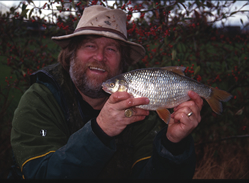
I have been catching fish around the country now for over 30 years so hopefully I've picked up a few useful tips along the way! So what I propose today is to give you my top 5 bait tips to catch more and bigger fish.
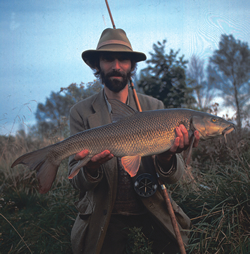

1) Without doubt my number one tip is to learn how to loose-feed correctly. Too often anglers will have the most expensive rod and reel, the most up to date bait but don't know how to feed a swim. All the great anglers I have fished with like John Wilson, Dave Harrell and Bob Nudd all have the ability to feed the swim correctly. Unfortunately there is no easy way to lean this skill it only comes with experience. The only advice I can give is don't keep doing the same thing if you are not catching fish.


I know that sounds a silly statement but so many unsuccessful anglers keep doing the same thing week in week out and catching nothing. Why not change the amount of bait that you are putting in at the start?

Travelling Light

Submitted by admin on December 9, 2008 - 4:08pm

I was chub fishing the other day, sharing the river with a friend as we went from swim to swim, leapfrogging each other in our search for the fish. With stops for lunch and of course the obligatory photographing of the best looking specimen, we must have taken five hours to fish two miles of river.
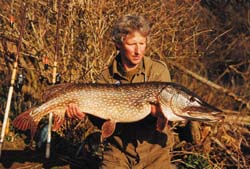
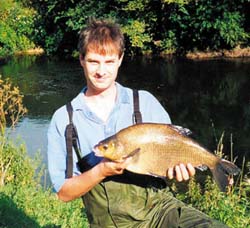
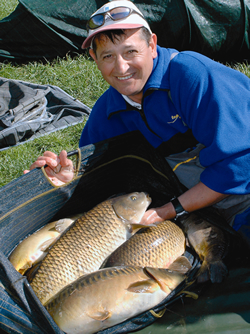
We only landed three chub, all over four pounds, but with our surroundings changing every few minutes we'd enjoyed a fascinating day of varied challenges and varied sights and scenes. Yet despite the different demands from all the dozen or so places we fished, we carried all the tackle and bait we needed in our jacket pockets, with just one rod each and a net between us.

At the end of the day we came upon another angler fishing close to a bridge, only 50 yards from where he had parked his car. He was sitting on one of those all purpose seat boxes which, when each drawer is filled with equipment, must weigh a ton - more like a fishing wardrobe than a seat - and he was surrounded by bait buckets, rod rests and several rods.

Prized Predators from the Exeter Canal

Submitted by admin on December 9, 2008 - 4:08pm

A 29lb plus fish caught on a large deadbait.

For the last thirty years I have travelled and fished the length and the breadth of the UK for many different species, both in freshwater and in the sea. As I grow older and my passion for angling increases as each year passes I find myself chasing an even wider selection of weird and wonderful species. Travelling to various countries within mainland Europe, to Africa and beyond to north and south America. Seemingly though our fondest memories often lie with our experiences as a young lad at grass roots level.

For the majority of my thirty eight years the backbone of my angling apprenticeship was formed in and around Exeter and particularly on the Exeter Ship Canal where I have landed every species of fish present over the years but my first love is, and always will be, predatory fish.

Coarse Fishing in the South Wessex Area

Submitted by admin on December 9, 2008 - 4:08pm

Tom Carter - 5lb Avon Bream

The Hampshire Avon

The Hampshire Avon rises in the Vale of Pewsey and, with its tributaries the Bourne and Wylye, drains the chalk of Salisbury plain. The River Nadder, which is joined by the Wylye near Salisbury drains part of the South Wiltshire Downs and (more significantly for anglers) the clays of the Wardour Vale.


The River Ebble and the Ashford Water enter the Avon downstream of Salisbury and Fordingbridge respectively.
Below Fordingbridge a number of New Forest streams enter the Avon. The Avon flows into Christchurch Harbour where it is joined by the River Stour.


The total fall from Pewsey to the sea is 110m, the average gradient downstream of Salisbury is approximately 2m/km. The flow is characterised by a high groundwater component derived from springs rising in the headwaters of the Avon and its major tributaries.


The river and its tributaries are of national and international importance for their wildlife communities.

Net Standards - A Real Success Story

Submitted by admin on December 9, 2008 - 4:08pm

Picture: The correct keepnet - essential for every angler! Alex Murray at Viaduct Fisheries

The correct keepnet - essential for every angler! Alex Murray at Viaduct FisheriesIt seems hard to believe that it is only three years ago that the Angling Foundation launched its Nets Accreditation Scheme for keepnets, landing nets and allied equipment. The scheme was formulated because of increasing concern by observant fishery owners over the abrasiveness of certain types of nets and the effect this could be having on their fish.

In the initial months, in early 2003, the initiative was the subject of public comment because of the mistaken belief that there would be moves to prohibit poorly designed nets. True, fishery owners did - and still do - reserve the right to examine anglers' equipment to ensure that it does not jeopardise the welfare of their fish, but the scheme was always voluntary and remains so.

Roach, Carp & Parenthood

Submitted by admin on December 9, 2008 - 4:08pm


Any bites Josh?

Josh, you OK?

Josh?

Josh was asleep.

Well, it was just past midnight and he'd never been up that late before.
How many of you have experienced taking one of your children on their first 'all nighter'? How was it for you? for me it was hugely enjoyable, a mixture of pride and excitement and memories flooding back of how I'd felt on my first nocturnal session.

We arrived at the fishery at about 7pm on a fine July evening to get set up. Josh had been fishing with me before, mostly spectating, and this was to be his first time in control of his own rod and line.
I set him up with an eight food light spinning rod, fixed spool reel, 6lb main line and a 2lb hook length to a 16 hook suspended from a float.
Bait was to be maggot and with a good population of small roach and skimmer bream in the water he was pretty sure to have some sport.
I tackled up an eleven foot rod with a small sliding ledger and maggot and a second rod with a cream flavoured boilie.
I baited up an area between a couple of bushes on my right and put a boilie on the hook!

On the hook? Yes, obviously boilies have been around for a long time and I have never used them before so I just assumed you put them on the hook. I have since been educated in such matters and the beauties of 'hair rigs' et al.
By this time Josh was getting bites and it wasn't long before he caught his first fish. WOW! I doubt that the three inch roach that devoured the single maggot will ever bring such a huge sense of joy and achievement to anybody again, and Josh was pretty pleased too! What is it that we enjoy so much about fishing? Outwitting the fish, the thrill of the fight? Neither would seem to apply in the case of this little shimmer of silver but the joy on Josh's face was as easy to read as a book. It's perhaps a little sad that many anglers lose this basic joy as the capture of such small 'easy' fish becomes a little tedious. We would do well to remember something of that first exciting catch and banish the phrase 'trash fish' from our vocabulary. Whoops, that's enough moralising for now.

By loose feeding with maggots Josh caught several more roach before the light faded and the float vanished into the evening gloom.
I retackled his rod with a sliding ledger and sweetcorn as hookbait and he recast. He actually picked up casting much quicker than I thought he would. The only difficulty he had seemed to be that the reel was physically a bit large for him to handle. When most people cast they hold the line against the spool with their index finger, Josh's isn't long enough so he had to hook the line over his finger which does make it harder to release the line at the right moment.

My usual setup is to use two storm lanterns adjacent to the seats for lighting and then washing up liquid bottle tops, clipped over the line between the first and second rod rings, as bite indicators. A bit Heath Robinson perhaps but it's cheap and it works. The only drawback is, of course, that you have to sit and watch instead of being woken by an alarm but that's no real hardship.
I have to say that Josh was not over impressed by this change in tactics and it wasn't hard to see why, no bites!
I explained that this is the way things were and if he did get a bite it was likely to be a bigger fish and this fuelled his enthusiasm for a bit longer. About two hours in fact which was when I discovered that, beneath copious layers of clothing, he had fallen asleep.

I woke him and suggested we had a midnight snack, good idea. I've got an old Renault Trafic van which makes a superb tent so we retired to the car park and brewed a cup of tea while Josh ate the chocolate, well most of it.
He got in his sleeping bag and went back to sleep and I returned to the water to do some serious 'undisturbed' fishing.

By 5am I'd caught one fish, a roach of about 4oz, well it was a slightly bigger fish. It was getting light now so I went and woke Josh and suggested some breakfast. Bacon eggs and fried bread went down very well, he wolfed it down although I have to say it looked a bit like someone had wolfed it down the previous evening but it tasted great.


Back to the fishing then. Needless to say Josh wanted the float back, I obliged and before long he was back into the small roach and the odd skimmer bream. I was, however,
catching very little so I decided to chuck out a few crusts. This is something I almost always do at first light. I cut half a dozen cubes from a nice crusty loaf and drop them in some likely spots along a nearby bank. On some waters you give up right away as the water boils with fry but on others it's frequently productive. Ideally you can see all the crusts from where you are fishing and spot any activity. Sure enough after about twenty minutes a crust was sucked down by a good fish, followed by another. At this point the boilie rod was re-tackled with a crust and we crept around to the area of activity. I dropped in another 'freebie' which was taken in five minutes so in went another, this time with a size six barbless hook in it.


Ten minutes later the crust was taken and I lifted the rod, waiting for the line to move off. It did, I struck and handed the rod to Josh. Surface hooked Carp usually move off at a rate of knots and this one was certainly no exception. Josh held on tight and looked on in astonishment as the line screamed off the lightly set clutch on reel, I actually grabbed hold of his coat to stop him sliding down the steep bank, after the small stuff he had been catching he had no idea that a fish could actually pull this hard. He made a fair attempt at playing the fish and after 5 minutes or so I netted it for him. Pleased or what? I took a photograph and let Josh gently return the fish to the water.

Now I was really pleased and proud that Josh had caught this fish but was not aware that it might have a downside. The immediate one was "lets catch another". Hmmmm, well it's not quite that easy Josh, we'll have scared them off. And more recently "let's catch some carp, I love catching carp".
To add strength to my argument (it's not always that easy) we recently had another all night session with the express intention of catching a carp for the cover shot of this years Get Hooked! It was at a local fishery, with a good population of large carp, that had been fishing well recently. A local angler was also there all night to 'reduce the odds' and another turned up before light. The sum total of our efforts... three carp anglers nil (one lost ghost carp) Josh about thirty rudd, golden orfe and golden tench to about 8oz. You can imagine the conversation; "have you caught anything Gra?", no, "I have. Has that man over there caught anything?", no. "Has that man caught anything Gra?", no. "I've caught more than anybody haven't I?", yes Josh.
He couldn't really grasp why people should 'deliberately' not catch fish, which were easy, in pursuit of something unseen which was obviously very hard to catch, that's very easy to grasp, isn't it?


Back to our original expedition and it was now about 9am. I was still fishing ledgered corn on one rod and boilie on the other and Josh was back with his floatfished maggot and catching fish again. Suddenly the bottle top on the boilie rig shot up and I struck. I knew right away that this was a good fish as it made off, hugging the bottom and taking line. After a solid fight I slid the net under a mirror of about 91b which was immediately returned.


Well that's about it, we fished on until about 11.30am and I spent most of the time watching and helping Josh who was still catching by generous loose feeding with the remainder of the maggots. He was a bit disappointed when we went to empty the keepnet, which had been kept in an outside shed, as some small rodents had surreptitiously enlarged the mesh sufficiently to allow all but a few of his fish to escape but on the whole he really enjoyed himself. He just about made the twelve mile journey home without falling asleep but wandered around like a zombie for the rest of the day and slept like a log that night.


To conclude this little tale I'd like to offer a few thoughts from my experience. If you need patience to be a fisherman, treble it and then add some if you intend taking your offspring. You'll spend a lot of time undoing tangles and getting hooks out of seats and the like. (pick a swim with no trees nearby) This also means, if you are fishing yourself, you are going to miss fish, I missed at least two 'sucker' runs on the boilies. Be as sure as you can that your subject is actually going to catch fish, he/she will get bored very quickly. Take lots of grub and treats, this is great for staving off the aforementioned boredom. If it gets really bad pick up and go home, don't inflict fishing on your pupil (you can always go again on your own). Six years old, in my experience, is the minimum age if your pupil is going to fish with any degree of independence.
Whatever the drawbacks, with a little extra patience I know you'll find it an extremely rewarding experience.

Luck and Stuff

Submitted by admin on December 9, 2008 - 4:08pm

Even the most professional and experienced of anglers must admit to there being a large degree of luck involved in the sport.

Perhaps luck isn't the right word, it's more 'unpredictability'. I'm sure most have caught a species or size of fish which was completely unexpected at the time. This has to be one of the attractions of the sport. The anticipation when watching the float dip, hearing the buzzer blip, feeling the fly line tighten, whatever the method of detection you can never be sure what's on the other end.

An occasion springs to mind last February when I took Josh and Alf (two sons aged 11 and 9) to local coarse water Elmfield Fisheries. Just going in February was, unexpected to start with. It's normally very cold but we were having a spell of unusually mild weather and it was a bit of a spur of the moment thing.

The boys both fished with whips and pole rigs (saves me a lot of time undoing tangles) and I used a 11ft match rod and waggler set up. For the fist 3 hours they out fished me completely. Maggot was the bait and they were catching small roach, rudd and perch. The wind changed direction at about 10am and we moved to new swims to keep the wind behind us. The boys continued to land fish with a couple of bream now amongst the catch. I'd been helping the boys, showing them how to unhook the fish and use a disgorger but decided it was time to sit down and fish properly for an hour.


I just loose fed with maggots, little and often, and caught a perch of about 10oz followed by a bream of a pound or so but the next time the float dipped I struck and nothing moved. Then line began to run off the reel as something large started off across the lake. I was using 4lb line straight through so knew I stood a good chance of landing the fish as long as the hook held and I had the patience to tire the fish on an underpowered rod. The other problem was the pathetic landing net I'd brought. I have perfectly good landing nets, large and small but couldn't find them this morning and the only one I could find had a 5ft handle and a head about 1 ft across.

The boys were pretty excited and we hadn't even seen the fish as it swam up and down in front of us, hugging the bottom. Inevitably the fish did begin to tire and broke surface for the first time. There was a chorus of 'Wow!' from behind me as we got our first glimpse of a carp, and a double at that. The owner of the fishery happened to turn up at this moment and did a great job of getting the fish in the net. A beautiful common estimated at 14lb (no scales to weigh it!) was quickly photographed and returned.


A classic case of me being lucky? Certainly was, it took a degree of experience to play and land the fish but, as Alfie proved later by losing a good fish on the whip when the hook pulled out, the fish could have just as easily have picked up someone else's bait. This style of fishing must be the most commonly practised, loose feeding with bits of hookbait, fishing with a float and catching whatever comes along. Really enjoyable, especially when you get 'lucky'.

Pages